Non-Certified Translation Services: What They Are (and Are Not)
Understanding scope, limitations, and appropriate use cases
TRANSLATION & LOCALISATION
2/10/20265 min read

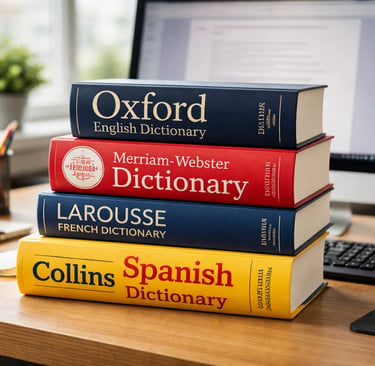
When people search for translation help, they often don't realize there are different types of translation services—each suited to different purposes.
The most common confusion? The difference between certified and non-certified translations.
Many users assume all translations are the same. They think any translated document can be submitted to immigration authorities, courts, or government agencies. Others believe that only certified translations are "real" translations, and that non-certified translation services are somehow inferior or unprofessional.
Neither assumption is accurate.
Non-certified translation services are a legitimate, widely used option for general, informational, and business purposes. They're not less professional—they're simply designed for different use cases.
Understanding the distinction matters. Using the wrong type of translation can lead to rejected applications, wasted time, and unnecessary costs.
This article explains what non-certified translation services are, what they're used for, what they cannot be used for, and how to choose the right type of translation based on your specific needs.
What Non-Certified Translation Services Are
Non-certified translation services provide accurate translations of documents for general understanding, internal use, or informational purposes—without the formal certification required for legal or official submissions.
Translation for General Understanding and Internal Use
Most translation needs don't require legal validation. Businesses translate internal documents, training materials, and communications. Individuals translate personal letters, emails, or informational content.
Non-certified translation services handle these scenarios. The goal is accurate communication—not legal compliance.
Informational, Marketing, or Personal Documents
Common use cases include:
Website content and marketing materials
Product descriptions and brochures
Internal business reports and presentations
Personal correspondence and family documents
Books, articles, and educational content
Social media and digital content
These translations need to be accurate and culturally appropriate, but they don't require official certification because they're not being submitted to authorities or used in legal proceedings.
Content That Does Not Require Legal Validation
The key distinction: non-certified translation services are for documents that don't need to be legally validated or authenticated.
If your document is for personal reference, business communication, or public information—and won't be submitted to a court, government agency, or official institution—non-certified translation is appropriate.
Professional translation doesn't require certification to be high-quality. It requires expertise, accuracy, and cultural competence—all of which non-certified translation services provide.
What Non-Certified Translation Services Are NOT
It's equally important to understand what non-certified translation services cannot be used for.
Legal or Court Documents
Court filings, legal contracts, witness statements, and other legal documents typically require certified translations.
Courts and legal institutions need assurance that the translation is accurate and complete. Certification provides that assurance through a formal statement by the translator or translation agency.
Non-certified translation services do not include this certification, which means they cannot be used for legal proceedings.
Immigration or Government Submissions
Immigration applications, visa documents, and government submissions almost always require certified translations.
Government agencies need official confirmation that the translation is accurate and complete. Without certification, your application may be rejected—even if the translation itself is perfectly accurate.
If you're applying for a visa, citizenship, or any government-issued document, confirm whether certified translation is required before ordering.
Official Certificates
Birth certificates, marriage certificates, diplomas, and other official documents usually require certified translation when submitted to authorities.
Document translation for these purposes must include a certification statement, translator credentials, and sometimes notarization or apostille, depending on the jurisdiction.
Non-certified translation services can translate these documents for informational purposes (for example, understanding what a foreign diploma says), but they cannot be used for official submissions.
How Non-Certified Translation Is Typically Delivered
Non-certified translation services use various methods depending on the document type, complexity, and client needs.
Human Translation
Most professional translation is done by human translators with expertise in specific language pairs and subject areas.
Human translators understand:
Cultural nuances and context
Industry-specific terminology
Idiomatic expressions and tone
Formatting and layout requirements
This expertise ensures translations are accurate, natural-sounding, and appropriate for the target audience.
Machine Translation with Human Review
For high-volume content or budget-conscious projects, some translation services use machine translation as a first pass, followed by human review and editing.
Machine translation has improved significantly in recent years. Tools like Google Translate, DeepL, and specialized translation software can produce usable drafts—but they still make mistakes, especially with:
Complex sentence structures
Technical or specialized terminology
Cultural context and idiomatic expressions
Tone and formality levels
Human review corrects these issues, ensuring the final translation is accurate and appropriate.
Quality Control and Consistency Checks
Professional translation services include quality control processes:
Proofreading for accuracy and grammar
Consistency checks for terminology and style
Formatting review to match the source document
Final review by a second linguist (for critical projects)
These steps ensure the translation meets professional standards—even without certification.
When Non-Certified Translation Is the Right Choice
Non-certified translation services are appropriate for a wide range of scenarios where legal validation isn't required.
Website and Content Translation
If you're translating your website, blog, or marketing materials for international audiences, non-certified translation services are the right choice.
These translations need to be accurate, culturally appropriate, and SEO-optimized—but they don't require certification.
Internal Business Documents
Companies translate:
Training manuals and employee handbooks
Internal reports and presentations
Business correspondence and memos
Product specifications and technical documentation
These are internal use cases. Certification isn't necessary because the documents aren't being submitted to external authorities.
Informational Materials
Educational content, informational brochures, user guides, and instructional materials fall under non-certified translation services.
The goal is clear communication and understanding—not legal compliance.
Books, Articles, or Long-Form Content
Authors, publishers, and content creators use non-certified translation services to translate:
Books and manuscripts
Articles and essays
Research papers (for informational purposes, not official submission)
Creative content and storytelling
These translations require literary skill and cultural adaptation, but not certification.
Common Misunderstandings About Translation Services
Several misconceptions create confusion when people search for translation services.
“All Translations Are Legally Valid”
Not true. Only certified translations are accepted for legal, immigration, or official purposes.
A perfectly accurate translation from a qualified translator still won't be accepted by a court or government agency if it lacks the required certification.
“Machine Translation Is Always Enough”
Not true. While machine translation has improved, it's not reliable for:
Complex or technical content
Documents requiring cultural nuance
Content where accuracy is critical
Formal or professional communications
Machine translation works well for getting the general idea of a text, but it's not a substitute for professional translation when quality matters.
“Certified Translation Is Required for All Documents”
Not true. Most translation needs don't require certification.
If you're translating for personal understanding, business communication, or informational purposes, non-certified translation services are appropriate—and often more cost-effective.
Only use certified translation when specifically required by the receiving institution.
Conclusion
Non-certified translation services are a legitimate, professional option for general, informational, and business translation needs.
They provide accurate, culturally appropriate translations without the formal certification required for legal or official submissions. They're not inferior to certified translations—they're simply designed for different purposes.
Understanding the distinction helps you choose the right type of translation services for your needs:
Use non-certified translation for: websites, marketing materials, internal documents, personal correspondence, and informational content
Use certified translation for: legal documents, immigration applications, government submissions, and official certificates
The key is matching the translation type to the document's purpose. Using certified translation when it's not required wastes money. Using non-certified translation when certification is required wastes time and risks rejection.
Professional translation doesn't require certification to be high-quality. It requires expertise, accuracy, and cultural competence—all of which reputable non-certified translation services provide.
Choosing the correct type of translation depends on understanding your document's purpose, audience, and level of formality required. Before selecting a translation option, it is useful to review pricing details and understand how the translation process works.
Writing Services Pro
Structured professional writing services for business, academic, and career advancement.
Contact
contact@writingservices.pro
123-123-1234
© 2026 Writing Services Pro. All rights reserved.